EMPR 240 Weblog 2- Gender Gap in Canadian Parliament

Women make up nearly 50% of the Canadian population, and yet are vastly underrepresented in Parliament. In the CBC article “50% Population 25% Representation. Why theParliamentary Gender Gap?”, the author talks about the overwhelming gender gap that is present in Canada. In the 2015 election, a record breaking 88 women were elected into Parliament, accounting for 25% of the seats in the House of Commons. This is up from 76 women in 2011. This poses the question of whether women are not being elected into Parliament, or if they are simply not running in the first place. In the 2015 election, women made up only 33% of candidates for the major political parties. So this issue must stem deeper, why aren’t women running for office? There are many different potential explanations why women are less inclined to run for office, and it is my belief that it is a combination of all of these that is the root cause for such a large gender gap in Canadian Parliament.

The first potential answer that is suggested here is that Canada is an “old democracy”, and old democracies are less inclined to extreme changes, special treatments, or any kind of quota system. Quota systems are also sometimes frowned upon because they are believed to put undeserving candidates in parliamentary positions, which might make them less respected. In “fast track countries” on the other hand (new democracies or places that have experienced recent conflict), women’s representation is growing at a much quicker rate. Surprisingly, even countries such as Rwanda, Bolivia, and Iraq are passing Canada in terms of Parliamentary gender equality.

In Canada, although there is certainly still some gender stereotyping occurring in the workplace, that doesn’t seem to be the case here. Canadian citizens seem to favour party loyalty over personal traits such as gender. Instead, one women suggests that this is a deeper rooted issue having to do with the difference between mainly male and mainly female attributes. Men tend to be more willing to sign up to run for office, where women tend to wait to be asked, and are surprised when they are asked to enter. Another women in the CBC article says that there is so much overt sexism in the house of commons, that women tend to stay away from politics all together. With occurrences of sexual assault high and non family-friendly work policies, women interested in politics might be more inclined to choose a different career path.

Presently, Canada has implemented grassroots initiatives to get more women into politics directly from University. Through different programs such as “She Will Run”, and internships offered at the House, they are hoping to see more young women immerse themselves in running for Canadian politics. But it is important to recognize that gender parity does not happen instantly. Instead it happens over time, and often with work. It seems to me that Canada is taking a step in the right direction to having women represented in parliament, but we still have quite a ways to go.

Articles mentioned: “50% Population, 25% Representation: Why the Parliamentary Gender Gap Persists.” CBCnews, CBC/Radio Canada, http://www.cbc.ca/news2/interactives/women-politics/.
EMPR240 Weblog 1- Parental Leave Changes

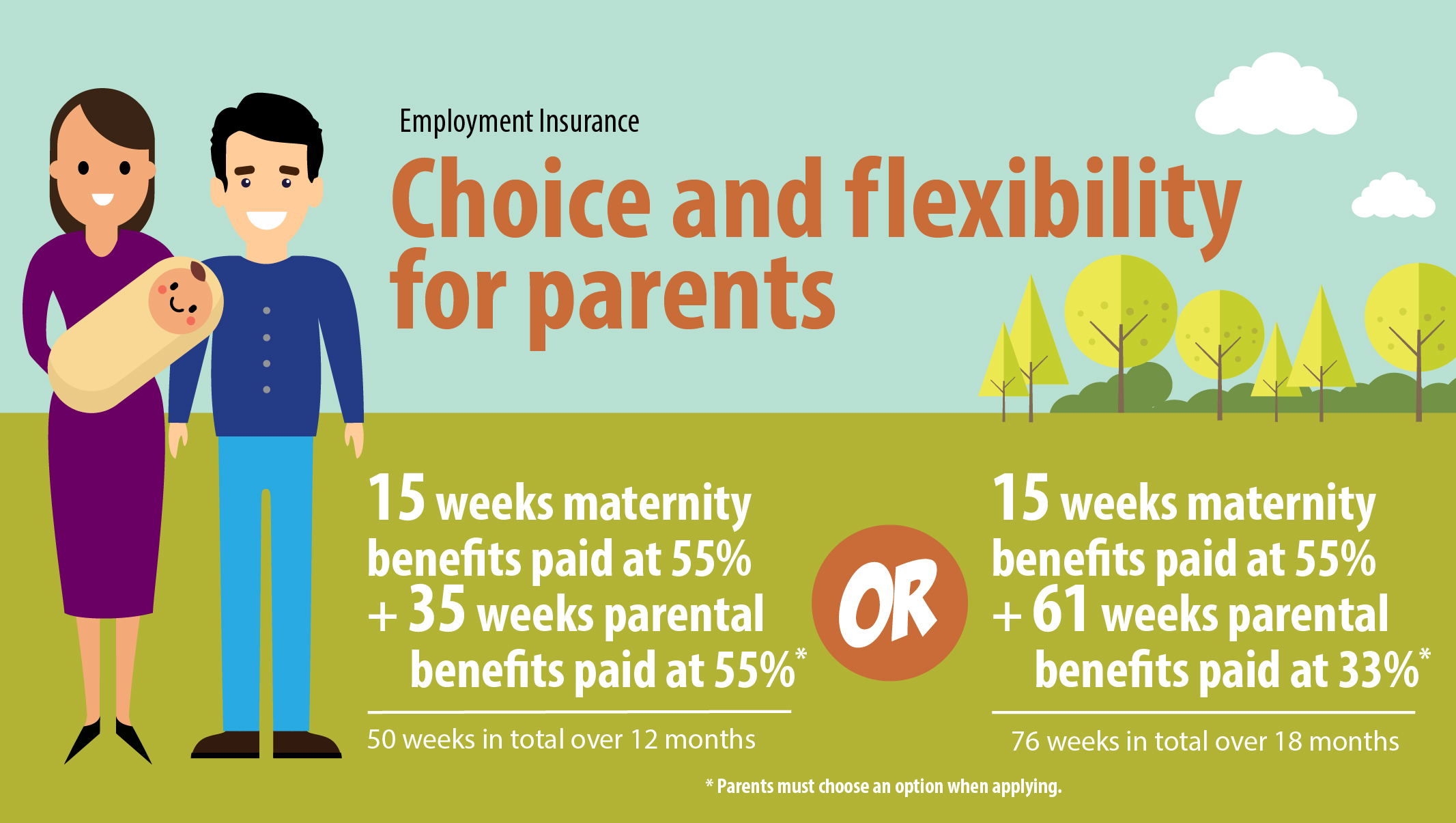
Recently, the government of Ontario has implemented a change in Parental leave benefits. This change will allow parents to spread their parental leave over the course of 18 months, instead of the previous 12. This may seem like a step in the right direction, but we should probably dig a little deeper before we make such a bold claim. This change will only apply to employees who work in federally regulated sectors, meaning only about 8% of the Canadian population. In addition, parents who decide to take this extended leave, will not be receiving any additional compensation. Those who only have 12 months of compensation benefits will be awarded 55% of their average weekly earnings, and so parents who choose to extend their leave to 18 months, will only receive 33%. This poses another issue, because very few parents will be able to afford to take this compensation. 33% of an average work week, for many, is not enough to live off of. So not only is this benefit only available to a very small number of Canadians, but even among this small number, an even smaller number are able to afford to take advantage of it. The picture below is an infographic that the government published, displaying the new benefits, and highlighting the “choice” that this new change will allegedly give families.

Image result for extending parental leave in canada

On the other hand, workers are now testing to see if they could potentially divide their leave, whether it be 12 or 18 months in length. Parents might want a couple months at the beginning of their child’s life, to return to work for a couple months, and then take the remainder of their leave when they so choose. I can certainly see with this idea could pose issues for businesses, small ones in particular. When someone goes on parental leave, it can be difficult, stressful, and expensive to find and train a replacement for when they are gone. It might simply be too strenuous on business for an employer to have to do this several times throughout a couple of years. If parents are claiming that they need more time off after their child’s birth or adoption, they should be forced to take it all immediately after their child is born/adopted.

What can be done to make parental leave better for all parents in Canada? Thats simple- make it equal for everyone. The provinces need to decide whether 18 month parental leave and the family benefits of it, weigh out a 12 month leave, and the business benefits of it. Once this is decided, it should be implemented for ALL workers in Canada.

Articles mentioned:
“Parental Leave Changes a Baby Step in the Right Direction, but ‘Vast Majority’ of Workers Left out | CBC News.” CBCnews, CBC/Radio Canada, 10 Nov. 2017, http://www.cbc.ca/news/business/parental-leave-ei-business-newborns-maternity-canada-1.4395055.

“Parental Leave Changes a Baby Step in the Right Direction, but ‘Vast Majority’ of Workers Left out | CBC News.” CBCnews, CBC/Radio Canada, 10 Nov. 2017, http://www.cbc.ca/news/business/parental-leave-ei-business-newborns-maternity-canada-1.4395055.

Introduction

Hi! My name is Cassandra Ferreira and I am a third year political studies student at Queen’s University. When I am not at school, I like spending time with friends and family in my hometown of Cambridge, Ontario.

EMPR 240 will be my first employment relations course at Queen’s, and I am quite excited! A few of the modules definitely popped out at me, and look quite interesting. After my undergraduate degree in politics I hope to pursue law school, so a course like this is certainly interesting to me.

My first job was at a family run golf course. Although I started out by washing dishes and helping in the kitchen (I wasn’t old enough to serve), I soon realized that I wanted to be on the customer service side of the business. Once I got SmartServe certified, I began serving and bartending, and I enjoyed this immensely. This job taught me a lot about both the food and customer service industries, and gave me the tools to go on and work in various customer service positions throughout the years.

Thanks for getting to know me, Im looking forward to a great semester!

~Cassandra Ferreira